
Responsible diving in Seaflower: how to dive without harming the reef
Diving in San Andrés and Providencia means diving inside a biosphere reserve. That doesn’t mean filling every dive with rules; it means understanding that every fin kick counts. Here’s why Seaflower is so valuable and what you can do, from buoyancy to sun cream, so that the reef is still there when you come back.
Why Seaflower matters
UNESCO designated Seaflower a Biosphere Reserve in 2000. According to Coralina, the archipelago’s environmental authority, its Marine Protected Area covers 65,000 km² and includes about 223 km of barrier and fringing reefs. Its barrier reefs are often cited as the third largest in the world.
UNESCO adds another figure: these reefs make up more than three quarters of Colombia’s coral reefs. And the reserve isn’t just coral: there are seagrass beds, mangroves, beaches and open ocean too, and the mangroves are linked to traditional activities of the Raizal people.
Buoyancy, your best tool
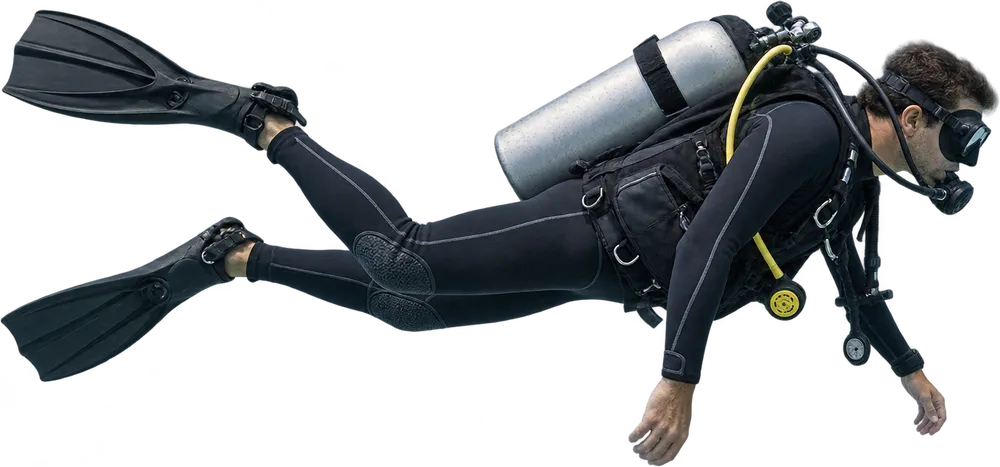
PADI puts it like this: maintain excellent buoyancy control and stay off the bottom, because stirred-up sediment can smother corals. Good buoyancy also makes the dive safer and helps you use less air.
Watch your fin kicks near the reef: a careless kick stirs up sand, disturbs animals or hits the coral. If you find it hard to stay steady, tell the guide. There are courses designed to improve it, such as PADI’s Peak Performance Buoyancy.
Look, don’t touch
Keep your fins, kit and hands away from the reef. According to PADI, even the lightest touch can do harm: the oils on your skin wear away the layers that protect marine animals.
Gloves don’t change that. The Green Fins guidelines, which PADI shares with its professionals, strongly discourage gloves for recreational tropical diving: they give a false sense of security, and touching coral with gloves still damages it.
At Old Providence McBean Lagoon National Natural Park, Parques Nacionales (Colombia’s national parks authority) puts it in writing, and it makes sense across the whole archipelago:
- Don’t touch, take or break coral.
- Don’t buy crafts made from shell or coral.
- Don’t leave rubbish, on the beach or on the boat.
Don’t feed or chase marine life
In the archipelago it’s the rule: Coralina’s Resolution 611 of 2022 bans baiting and handling marine life, including fish, sharks and rays, throughout the department.
And it makes sense underwater. Human food isn’t good for fish, and chasing an animal is the surest way never to see it again. If an animal gets frightened, PADI advises backing off, staying low and keeping still, and letting it go about its business.
Sun cream and what’s in your bag
Some chemical filters, such as oxybenzone and octinoxate, are linked to making coral more susceptible to bleaching. A “reef safe” label guarantees nothing: there’s no globally agreed definition, so read the ingredients.
Covering up works best: UV-protective clothing protects your skin and the reef at the same time. If you use cream, mineral sun creams haven’t so far been linked to bleaching, although research is ongoing; put it on at least 30 minutes before getting in the water, so that it soaks in and doesn’t end up in the sea.
Out of the water, the usual: a reusable bottle and no single-use plastic on the boat.
More about the island
Your first dive trip
How a dive day is organised, what you’re told before each dive, how the buddy system works and the pace of diving in a small group.
Open Water or Advanced
The dive sites on both islands sorted by certification: which you can enjoy with Open Water, which depend on the section and which call for Advanced.
What to pack
What your bag can’t do without: dive documents, insurance, a suit for warm water, mask, sun protection, medicines and the no-fly time after your last dive.
Tourist card
The tourist card price in 2026, exemptions, where to buy it, Check-MIG, visa and passport.
Frequently asked questions
Can I feed the fish in San Andrés?
No. Coralina’s Resolution 611 of 2022 bans baiting and handling marine life, including fish, sharks and rays, throughout the archipelago of San Andrés, Providencia and Santa Catalina.
Should I wear gloves for diving in the Caribbean?
Better not. The Green Fins guidelines, shared by PADI, strongly discourage gloves for recreational tropical diving: they give a false sense of security, and touching coral with gloves still damages it.
Which sun cream should I use for diving?
One without oxybenzone or octinoxate, and check the ingredients, not the “reef safe” label. Better still, cover up with UV-protective clothing and keep the cream for whatever is left exposed.
Can you picture yourself beneath these waters?
If you’d like to discover San Andrés by diving, in a small group and with everything organised, leave us your details.
See the trip- No commitment, no payment
- We write to you personally with dates, programme and price
- Your details are only used to reply to you